Why I Call Myself a Human Therapist
Last week, I was in a room full of trauma therapists for a training I was giving.
We were talking about something that doesn’t always get named clearly, but everyone in the room could feel it.
The depth of relationship required for real healing.
Not just the techniques like EMDR, DBT, Brain spotting, etc.Not just protocols.Not just doing therapy “well.”
But being in a relationship that can actually hold what trauma brings.
At some point during the training, I said something out loud that I hadn’t planned to say. I was talking about being a therapist, yet what came out of my mouth was,
“I’m a human therapist.”

And the room shifted.
It wasn’t a rejection of training. Nor was it a planned comment that I was previously reflecting on.I wasn’t rejecting my own skill or support around me.Or all the ways we learn to do this work responsibly and ethically.
It was something else.
A remembering. And a growing concern for the future of therapy.
Because at the center of trauma work is not a model.
It’s a relationship.
Over the years, I’ve come to believe something deeply:
The relationship between therapist and client is not just part of the work.
It is the work. Let’s say that again for the people in the back. The relationship IS the work!
Not in a performative way.Not in a boundaryless way.But in a deeply intentional, grounded, human way.
I often say:
Serve the attachment of therapy without being attached to the outcome of therapy.
That line has shaped me.
Because it holds a paradox that feels essential to this work.
To serve the attachment means:
I care about the relationship we share.I track it.I protect it.I show up to it.
I notice when something shifts.I stay when something gets hard.I allow myself to be impacted, without losing my center.
And at the same time,
I am not attached to the outcome. Even when what I want for the client differs from their desires.
I cannot force healing, or growth, or really any aspect of therapy.I cannot make someone stay in therapy.I cannot rush capacity that hasn’t yet been built.
This allows something important to happen.
The relationship becomes real.
Not transactional.Not outcome driven.Not something to “get right.”
But something to be in. A relationship for both of us to experience. And this matters even more right now.
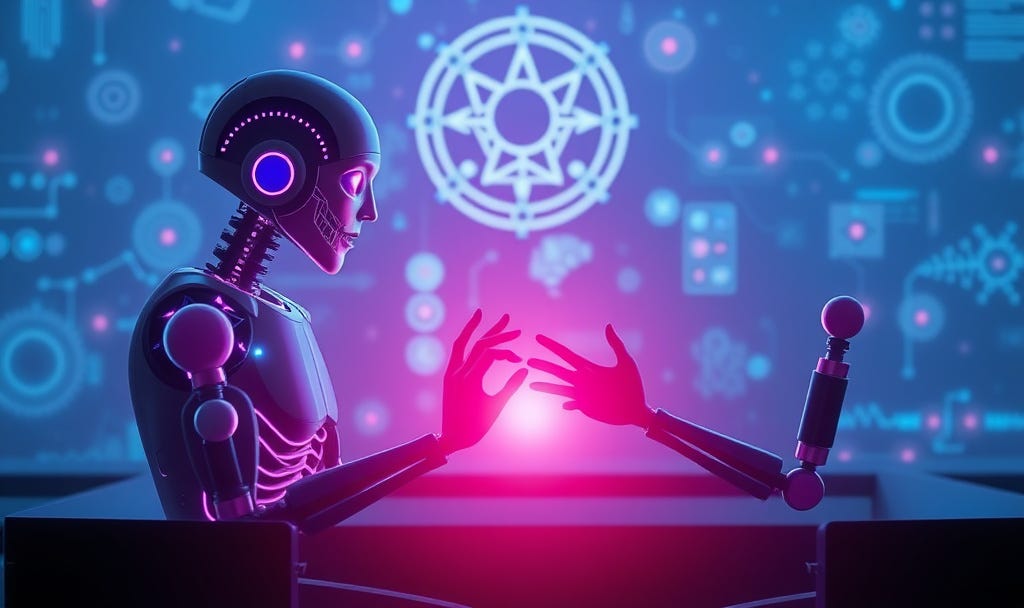
We are living in a time where AI can do remarkable things.
It can:
reflect language
organize thoughts
offer insight
even simulate understanding
Geez, AI can transform work environments. My business leader son C.J. and Claude are doing amazing things together. Yet, they will never have coffee together or meet on Zoom (at least not yet, who knows!).
And I want to be clear:
I use AI. I appreciate it. I think it has a place.
But I also feel something rising in me alongside that appreciation.
A clarity.
Therapy is not just about being understood.
It is about being in relationship together.
Real relationship.
Where:
You can be misunderstood, and repair happens.You can pull away, and the therapist stays steady, consistent and by your side.You can feel shame and not be left alone in the arena.
These are not optimized experiences.
They are not efficient.
They are not clean.
They are human.
And for many people, especially those with developmental trauma,
this is the work that was missing. This relationship is about “what should have happened”.
Not more information.
Not better explanations.
But a relationship where:
Something hard can be feltand connection doesn’t disappear.
A human feeling relationship cannot be replicated with AI.
Because it requires something essential:
Mutual presence.
Impact.
Risk.
Repair.
Yes, Claude pushes back a bit. Yet Claude won’t be breathing the same air as a therapist and client working through decades of heartache, loss and experiences no one should have to untangle.
Claude can hear us. Claude can see us.
Yet, Claude can’t feel us. ChatGPT gives back what we fill it with, Claude goes deeper with efficient insight. A human therapist can feel, deeply feel, what the client they are sitting with is experiencing.
So, when I say I am a human therapist, I mean this:
I am trained.I am thoughtful.I am continually learning.
And,
I am willing to be in the relationship. I can feel in my body what is happening in the room.
Not perfectly.
But honestly.
To notice what’s happening between us.To stay when it would be easier to move on. To reach out when I can feel the need for connection, and to accept the bid for connection needed to deepen our relationship.To allow the work to unfold at the pace of the person, not my preference.
To serve the attachment.
Without gripping the outcome.
Because in the end, transformation doesn’t come from perfect words curated from AI.
It comes from lived experience. My experience and my clients experience.
From being in a relationship where something new becomes possible.
And in a world that is becoming increasingly fast, efficient, and intelligent,
I find myself wanting to protect something slower.
Something deeper.
Something that cannot be replicated. Ever.
The human experience of healing.
That’s why I call myself a human therapist.
Connect with Growing Branches